Banner design involves creating visually striking and attention-grabbing graphics that are typically used for promotional purposes.
Let's Discuss Your IdeaBanners are widely used in digital advertising campaigns, including display advertising on websites, mobile apps, and social media platforms. These banners are designed to capture attention, communicate the message effectively, and drive traffic to a website or landing page.
Banners are often used as website headers or hero images. They occupy a prominent position at the top of a web page, immediately drawing the viewer's attention and setting the tone for the website's content or brand.
Banners are utilized in social media advertising campaigns across platforms such as Facebook, Instagram, Twitter, and LinkedIn. They are designed to engage users, communicate key information, and generate clicks or conversions.
Banners play a vital role in promoting events such as conferences, trade shows, concerts, or festivals. They are used as eye-catching visuals on websites, social media, emails, and physical signage to create awareness and encourage attendance.
Banners are commonly used in retail environments to promote sales, special offers, or new product launches. They are placed in-store, at the point of sale, or on the exterior of the establishment to attract customers and drive foot traffic.
Banners are frequently utilized in trade shows and exhibitions as booth displays, backdrops, or hanging banners. They serve to attract attention, communicate key messages or brand identity, and differentiate exhibitors from their competitors.
Banners find applications in outdoor advertising, such as billboards, street banners, and building wraps. These large-format banners are designed to be visually impactful from a distance and capture the attention of passersby.
Banners are incorporated into various print marketing materials, including brochures, flyers, posters, and promotional materials. They serve as attention-grabbing visuals and reinforce key messages or branding.
Banners are used by nonprofit organizations for fundraising campaigns, charity events, or awareness initiatives. They help communicate the organization's mission, evoke emotions, and encourage donations or support.
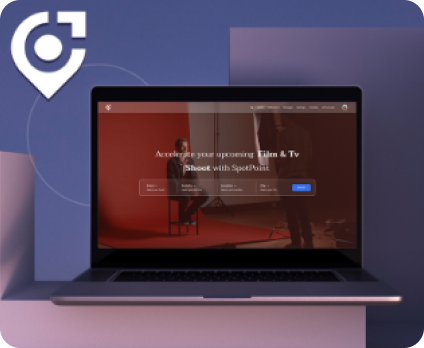
SpotPoint is a web platform, designed to help people find and rent Filming locations and unique venues for film. With its user-friendly interface and advanced search capabilities, the platform allows users to view listings in three unique ways: map view, and list view.


We believe our real wealth is client satisfaction and their honest feedback.
You can see yourself how and why our clients consider us as the best web development agency in India.
Start by clearly understanding the purpose of the banner and the goals it aims to achieve. Discuss with the client or stakeholders to gather information about the target audience, messaging, desired actions, and any specific requirements.
Conduct research to gather inspiration, explore design trends, and analyze competitor banners or similar designs. This research phase helps generate ideas and provides a foundation for the design process.
Identify the key message or primary information that needs to be conveyed in the banner. Determine the desired call-to-action (CTA) that prompts the audience to take the intended action.
Proceed to the visual design phase, where you start creating the actual banner design using design software or tools. Apply design principles such as color theory, typography, hierarchy, contrast, and balance to create an aesthetically pleasing and visually impactful design.
Integrate the brand's visual identity into the banner design. Ensure that the logo, colors, typography, and other brand elements are appropriately represented and consistent with the brand guidelines.
Choose relevant and high-quality visuals, such as images, illustrations, icons, or graphics, that align with the messaging and enhance the visual appeal. Optimize the visuals for the appropriate resolution, format, and file size to ensure optimal display quality.
Select appropriate fonts that align with the brand and enhance readability. Craft concise and compelling copy that effectively communicates the message, utilizing headlines, subheadings, and supporting text as necessary.
Share the initial design with the client or stakeholders for feedback and iterate based on their input. Incorporate revisions and fine-tune the design to meet their expectations and objectives.
Once the design is finalized, prepare the final files in the appropriate formats and resolutions. Provide the client or stakeholders with the necessary files for both digital and print use, ensuring they are ready for implementation or distribution.