Ecommerce development refers to the process of building and creating online platforms or websites that facilitate the buying and selling of products or services over the internet.
Let's Discuss Your IdeaShopify is a popular and widely used e-commerce platform that allows businesses to create and manage their online stores easily. It provides a range of tools and features to help entrepreneurs and businesses build, customize, and scale their e-commerce websites.
BigCommerce is a robust e-commerce platform that enables businesses to create and manage their online stores. It offers a comprehensive set of features and tools to help entrepreneurs and organizations build, customize, and scale their e-commerce websites.
WooCommerce is a popular e-commerce plugin for WordPress, allowing businesses to transform their WordPress websites into fully functional online stores. It provides a wide range of features and customization options to create and manage e-commerce websites effectively.

Accelerate the growth of your business by leveraging the power of websites. A well-designed and strategically developed website can be a game-changer for your business.
Platform Selection: Choosing the right e-commerce platform is crucial. There are several options available, including hosted platforms like Shopify, WooCommerce, BigCommerce solutions. Each platform has its own
Website Design and User Experience: Creating an appealing and intuitive user interface (UI) is vital to engage customers and enhance their shopping experience. The website design should be visually appealing, mobile-responsive, and easy to navigate. It should focus on clear product displays, simple search functionality, and smooth checkout processes.
Product Catalog Management: E-commerce websites require a robust product catalog management system. This involves organizing products into categories and subcategories, managing inventory levels, setting prices, and providing detailed product descriptions and images.
SEO and Digital Marketing:: Optimizing the website for search engines and implementing digital marketing strategies such as search engine marketing, social media marketing, and email marketing can drive traffic, increase visibility, and improve conversions. Implementing SEO best practices, utilizing keywords, and optimizing product pages can help improve organic search rankings.
Analytics and Reporting: Implementing analytics tools like Google Analytics can provide valuable insights into customer behavior, sales performance, and website performance. Utilize these insights to make data-driven decisions, optimize marketing strategies, and improve the user experience.
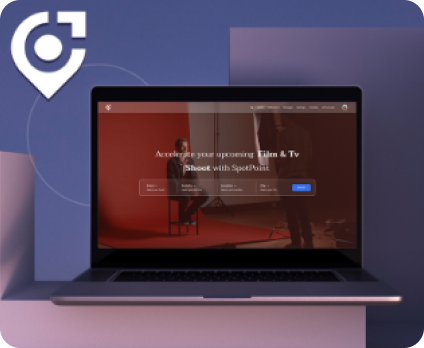
SpotPoint is a web platform, designed to help people find and rent Filming locations and unique venues for film. With its user-friendly interface and advanced search capabilities, the platform allows users to view listings in three unique ways: map view, and list view.
We believe our real wealth is client satisfaction and their honest feedback.
You can see yourself how and why our clients consider us as the best web development agency in India.
Experienced e-commerce development agencies can provide consultation services to help businesses define their e-commerce goals, select the right platform, and develop a tailored strategy for their online store.
E-commerce developers can guide businesses in selecting the most suitable e-commerce platform based on their specific requirements. They can set up the chosen platform, configure the settings, and ensure a smooth initial setup.
E-commerce development services often include custom website design that aligns with the business's branding and user experience requirements. This involves creating visually appealing, user-friendly, and mobile-responsive designs for the online store.
E-commerce developers build secure and user-friendly shopping carts and checkout processes that enable customers to add products, review orders, and complete purchases smoothly. They ensure efficient order management, inventory tracking, and seamless payment processing.
E-commerce websites often require integrations with various third-party services, such as payment gateways, shipping providers, inventory management systems, CRM tools, marketing platforms, and analytics solutions. E-commerce developers can facilitate these integrations to enhance the functionality of the online store.
E-commerce developers integrate secure and reliable payment gateways to enable businesses to accept online payments from customers. They configure payment gateway settings, implement payment processing functionalities, and ensure compliance with security standards.
E-commerce development services often involve customizing the online store's functionality according to the business's unique requirements. Developers can build custom features, extensions, or plugins that enhance the store's capabilities and provide a tailored experience for customers.
E-commerce developers conduct thorough testing to ensure the website functions as intended and is free of bugs or errors. They perform user acceptance testing (UAT), security testing, performance testing, and compatibility testing across various devices and browsers.
After the initial development, e-commerce development services may include ongoing support and maintenance. This involves monitoring the website's performance, addressing any technical issues, implementing updates and security patches, and providing technical assistance as needed.
We refers to the systematic approach and set of principles used in the process of designing and developing websites. It involves various stages, techniques, and considerations to ensure effective and user-friendly website design.
Creating low-fidelity visual representations (wireframes) of the website's layout, structure, and content placement. Focusing on usability, navigation, and user experience.
Developing the visual elements of the website, including color schemes, typography, imagery, and branding. Creating high-fidelity mockups or design compositions.
Building interactive prototypes to simulate user interactions and demonstrate the website's functionality, website flow, website user interface and user experience.
Translating the design into a functional website using coding languages like HTML, CSS, JavaScript and animation. Implementing responsive design techniques for cross-device compatibility.
Conducting usability tests, checking for bugs and errors, and ensuring the website functions properly across different browsers and devices.
Uploading the website to a hosting server and making it live on the internet. Conducting final checks to ensure everything is working correctly.